Olonka to Kilograms
Local grain measures are volumes, not weights, so a price per olonka, mudu or bag only becomes comparable once it is turned into a price per kilogram.
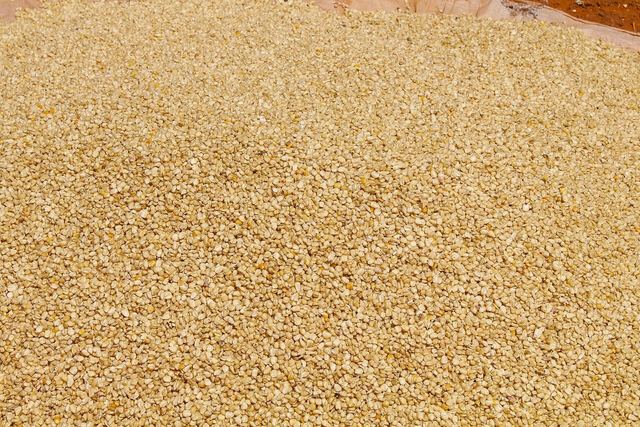
Grain markets in West Africa still trade in local measures such as the olonka in Ghana, the mudu in northern Nigeria and the sack or bag, but these volume units do not correspond to a fixed weight in kilograms. A price in olonka, mudu or bags cannot be compared with a price per kilogram until the unit is converted, and the conversion depends on the commodity and the location.
Why local grain units do not equal one fixed weight
A measure is a container, so what it weighs depends on what goes into it and how it is filled. A mudu of rice will not weigh the same as a mudu of maize, and the same container size is not used everywhere. A survey of Nigerian markets by the International Institute of Tropical Agriculture (IITA) found that the mudu used in Kano was about twice as big as the one used in Kaduna and Abuja, and that bag weights for the same commodity differed depending on how traders filled the bag.
Ghana Statistical Service (GSS) found the same problem in its first national Non-Standard Units Survey, released in 2026 with the Ministry of Food and Agriculture. It reported that a cocoa sack of dried yellow maize weighed about 131 kg in Greater Accra but about 198 kg in Bono East.
What the measured conversions say
The figures below are averages measured in the two surveys. They show the order of magnitude and how wide the spread is; they are not legal standards.
| Unit and commodity | Where measured | Average weight |
|---|---|---|
| Olonka, dried white maize | Ghana, national average (GSS) | about 2.55 kg |
| Cocoa sack, dried yellow maize | Ghana, Greater Accra vs Bono East (GSS) | about 131 kg vs 198 kg |
| Mudu, maize grain | Nigeria: Kano / Kaduna / Abuja (IITA) | 2.44 / 1.42 / 1.38 kg |
| Mudu, local rice | Nigeria: Kano / Abuja (IITA) | 2.99 / 1.50 kg |
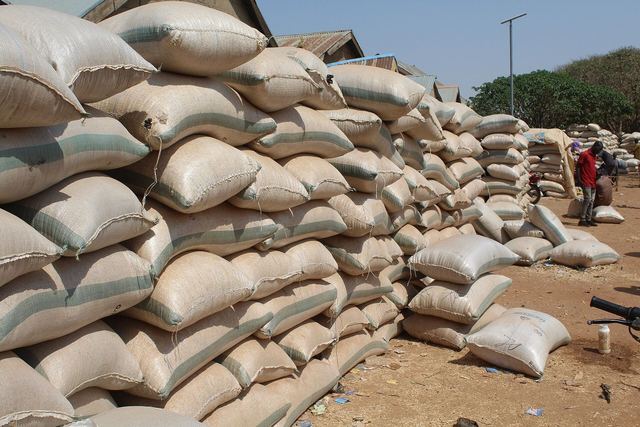
| Large bag, maize grain | Northern Nigeria, six markets (IITA) | about 91–101 kg |
IITA also noted that most wholesale grain traders in Nigeria used the "100 kg" bag, yet the large bags of maize it weighed in northern markets averaged about 96 kg. GSS publishes its conversion factors online through the Ghana Non-Standard Units Conversion Factor tool, where users can pick an item, unit and region.
How to convert a local-unit price into a kilogram price
To turn a price quoted in local units into a price per kilogram:
- Identify the commodity (maize, rice, sorghum, cowpea and so on) and the market where the unit is used.
- Find the average kilograms per unit for that commodity and area, from a national statistics office table or by weighing several filled units on a scale.
- Divide the price per unit by the kilograms per unit.
Illustrative numbers only: if a mudu of maize sells for 500 in local currency and that mudu holds 2.5 kg, the price is 500 ÷ 2.5 = 200 per kilogram. If a bag sold as "100 kg" actually weighs 90 kg, a price of 30,000 per bag is about 333 per kilogram, not 300.
Before trading, weigh a few filled units or bags where possible, check whether measures are heaped or levelled, and confirm current conversion factors with Ghana Statistical Service, the National Bureau of Statistics in Nigeria or the statistics office in the country concerned. Buying and selling by weight on a calibrated scale removes most of the doubt.