Cocoa Price in Ghana
Ghana's cocoa farmers are paid a producer price fixed by a government committee from projected export earnings, not a price set by daily market trading.
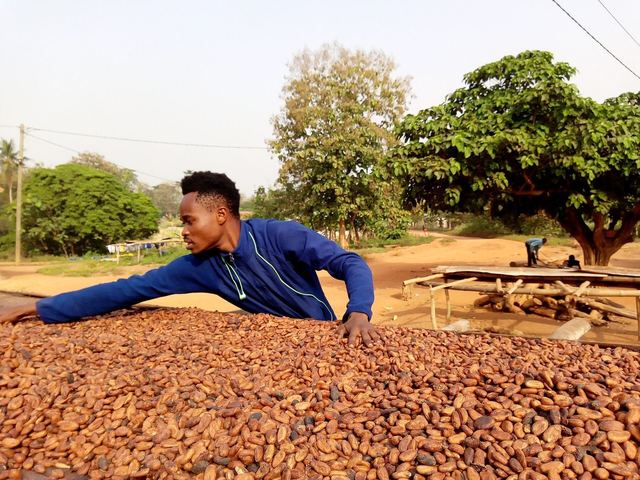
Ghana's cocoa farmers do not negotiate prices with exporters on an open market. Instead, a government-led process sets the price they are paid for the season, and that price is not determined day to day by world market movements.
Who sets the producer price
The Producer Price Review Committee (PPRC) on cocoa sets the regulated farm gate price, known as the producer price. It was established in 1983/84 and is chaired by the Minister for Finance. Its membership has included representatives of farmers, the Ministry of Finance and the Ghana Cocoa Board (COCOBOD), and was later expanded to include hauliers and Licensed Buying Companies (LBCs). The committee recommends the producer price as well as the shares of the export price going to the other agents in the cocoa sector.
According to an FAO background paper by Vigneri and Kolavalli, the PPRC's technical committee starts from projections of the free-on-board (FOB) price in US dollars, the cedi–dollar exchange rate and the expected crop size for the coming year. The Cocoa Marketing Company and the Bank of Ghana forecast prices and exchange rates, and a large part of the crop is usually sold forward before the price is set: the paper notes that by the time the estimate is made, 60 to 70 percent of the projected main crop is likely to have been forward sold. Costs of industry programmes are set aside, and the remaining net FOB value is shared among farmers and marketing agents. The committee also considers prices in neighbouring countries, and COCOBOD may revise the producer price to discourage smuggling.
The farmers' share and later revisions
The farmers' share has changed over time. The FAO paper records a policy commitment of 70 percent of the net FOB price, compared with the 40 to 60 percent of FOB more commonly paid in the 1990s. In recent seasons COCOBOD has expressed the price as a share of the gross FOB price. A Ghana Cocoa Board Bill passed by Parliament in July 2026 provides a legal framework for the PPRC and guarantees farmers not less than 70 percent of the FOB price.
The price is announced before the main crop season, which opens in October, but it is not fixed for the whole year: the PPRC has revised it during the season when world prices or the exchange rate moved sharply.
Price per bag and per tonne
COCOBOD announces the producer price both per tonne and per bag. A standard bag of cocoa beans is 62.5 kg, so there are 16 bags in a tonne and the price per bag is the tonne price divided by 16. COCOBOD's own announcements follow this ratio: a price of GHS 58,000 per tonne was published as GHS 3,625 per bag.
LBCs, licensed by COCOBOD, buy the beans from farmers at the announced producer price, and COCOBOD's Cocoa Marketing Company handles the export sales. Rules on the farmers' share, financing and buying arrangements are being reformed, so check the latest producer price and rules directly with COCOBOD.
Côte d'Ivoire runs a comparable system. Since reforms in 2011, its Conseil du Café-Cacao has sold about 70 to 80 percent of the coming crop forward in auctions and fixed a minimum farm gate price at around 60 percent of the value achieved in those forward sales, expressed on a CIF basis. In both countries, the practical point for farmers is the same: world price rises reach the farm gate only when the regulator reviews the official price.