PICS Bags vs Chemicals
Hermetic bags and storage insecticides both protect maize and cowpea from weevils, but they work differently and carry very different risks for farmers and buyers.
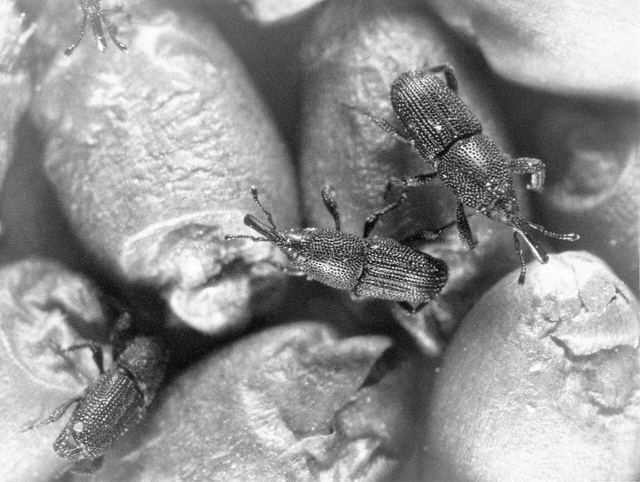
Weevils and bruchids can destroy stored maize and cowpea within months. Farmers and traders usually choose between two ways of protecting grain: hermetic storage bags, such as the Purdue Improved Crop Storage (PICS) bag, or ordinary woven bags with grain treated by storage insecticides. Hermetic bags cut off the oxygen insects need, while insecticides kill them chemically, provided they are applied exactly as the label says.
How Hermetic Bags Kill Weevils
A PICS bag has two high-density polyethylene liners inside an outer woven polypropylene bag. Once the bag is filled and sealed, insects and other living organisms in the grain use up the oxygen left inside. When oxygen becomes too low, insects stop feeding and die, and the carbon dioxide level rises. In a Purdue study of sealing methods, oxygen in bags holding grain heavily infested with maize weevils fell below 2% within a week, and insect population growth was suppressed.
The protection is well tested on cowpea, the crop the PICS programme was first developed for in West Africa. In a six-month trial in Niger published in 2025, cowpea in untreated woven bags lost 38.5% of its weight to pests, while grain in PICS bags suffered no weight loss. Hermetic bags also hold grain moisture steady: in a Purdue trial with maize over eight months, grain in triple-layer bags kept its moisture, while grain in woven bags dried out and lost germination. That also means a hermetic bag will not dry wet grain, so dry grain properly before bagging.
Filling, Sealing and Reuse
Correct use matters more than the bag itself:
- Fill the inner liner with clean, dry grain, leaving enough plastic at the top to close it.
- Squeeze out as much air as possible, twist the inner liner, fold the twisted end over and tie it tightly with cord.
- Close the second liner the same way, then tie the outer woven bag.
- Store bags off the floor, away from rats and sharp objects, and avoid opening them often, since each opening lets fresh air in.
Bags can be reused if the liners are intact. A survey of farmers and cowpea merchants in Niger found that 91% of respondents reused their bags at least once; they rated the bags as performing well in 100% of cases in the first year, 97.3% in the second, 79.0% in the third and only 15.4% in the fourth. Small holes were commonly repaired with tape. The cost logic follows from this: one bag bought once can protect grain over several seasons, while insecticide has to be bought and applied again for every new lot.
Where Chemical Storage Fits, and Where It Fails
Storage chemicals remain common, especially among larger traders. They include contact insecticides mixed with the grain and fumigants such as phosphine, released from aluminium phosphide tablets. Used correctly, approved products protect grain, but they must be registered for stored grain, applied at the dose on the label and used only by people who know how to protect themselves.
The problems come from misuse. Researchers in Niger note that repeated reliance on chemicals has led to insect resistance, health risks and food poisoning. Underdosing leaves insects alive to breed and become resistant, while overdosing leaves residues that buyers may test for. Aluminium phosphide is highly toxic to people, and fumigation belongs in gas-tight conditions handled by trained operators, never in living spaces.
For most smallholders and small traders storing maize or cowpea for home use or later sale, a well-sealed hermetic bag gives chemical-free protection with no residue risk. Chemicals can still suit large stores with trained staff, but they need to be approved for food grain and properly used.