Outgrower Scheme Contract
What FAO's principles for responsible contract farming say a farmer or farmer group should find in writing before signing with a processor or aggregator.
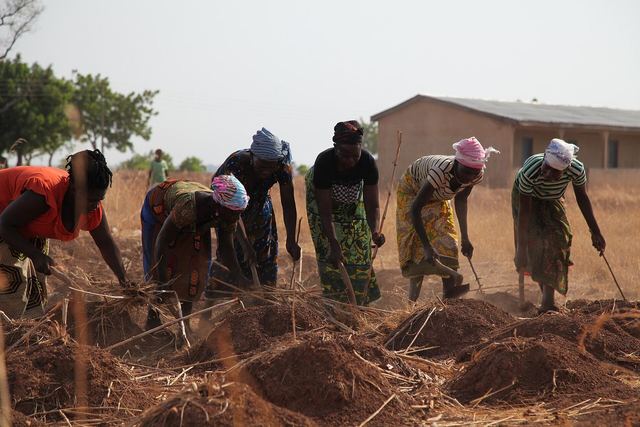
An outgrower contract between a farmer and a processor or aggregator is more than a deal over a single crop. It is a binding agreement, and what is written on inputs, quality grading, price, payment and disputes usually decides how the benefits are shared. The Food and Agriculture Organization (FAO) describes contract farming as an agreement in which the farmer supplies agreed quantities of a product to the buyer's quality standards and timing, and the buyer agrees to purchase it on agreed pricing terms, sometimes supplying inputs, land preparation or technical advice.
How schemes work in West Africa
In the cotton zones of Mali and Burkina Faso, cotton companies have long supplied seed, fertiliser and technical support on credit and recover the cost when they buy the crop. In Ghana, research on oil palm has compared simple marketing contracts with resource-providing contracts, in which the buyer also supplies inputs and services on credit. The weak point of input credit is side-selling: a farmer who took inputs sells the crop to another buyer offering a higher price, leaving the loan unpaid. FAO says farmers should not side-sell produce grown with the buyer's inputs unless the contract allows it, and that buyers should not renege on terms when markets or government policy change.
Clauses to read before signing
FAO recommends a written contract in clear language that a farmer of average education can understand, read aloud by a third party where farmers cannot read. Buyers should give farmers enough time to review the draft and seek advice before the season starts, and should hand over a copy of the signed contract. If a farmer group signs, the contract must make clear whether responsibility lies with each member or with the group.
- Quantity and quality: the quantity to be supplied over a set period, the quality standards, and how quality will be assessed on delivery.
- Price: clear criteria for setting the price and how they can be verified, avoiding complex formulas farmers cannot follow, and ideally a way to renegotiate if market prices change sharply.
- Grading: the right of farmers or their representatives to be present at delivery, a full explanation of any rejection or downgrading, and a written report of quantities and grades soon after delivery.
- Inputs and deductions: which inputs will be supplied, when, at prices no higher than prevailing commercial prices, and every charge or deduction that will reduce the net payment.
- Payment: when and where farmers will be paid.
- Risk: who bears losses from crop disease or poor inputs, and what happens under force majeure such as drought or conflict.
- Duration and termination: how long the contract runs and how much written notice is needed to end it.
- Disputes: a neutral third party agreed in advance, with mediation or arbitration tried before going to court.
A contract should also not stop farmers from comparing terms with other farmers or taking legal, financial or agronomic advice.
Practical takeaway
Schemes fail when these points are vague. Research on a sorghum contract scheme for a brewery in northern Ghana linked its failure partly to the lack of a suitable dispute-resolution mechanism. Before signing, a farmer group should check each clause above, ask for anything missing to be written in, and seek advice from an extension officer, cooperative union or lawyer if the terms on price, grading or deductions are unclear.