Cassava to Gari Conversion
One tonne of cassava roots gives very different amounts of gari depending on dry matter, variety and processing losses, so processors should price roots against a realistic yield.
One tonne of cassava roots may feel like a reliable measure, but when it comes to gari, it does not convert into a fixed amount. Dry matter content, variety, harvest time, plant age and processing losses all move the result, so any yield figure is a range rather than a single number.
What One Tonne Can Become
FAO gives the conversion rate of fresh roots into gari as 15–20%. Field measurements often land a little higher: a study of traditional processors in Nigeria (Bechoff and colleagues, 2019) found that 50 kg of unpeeled roots typically gave about 12 kg of gari, roughly 25%. A multi-environment breeding trial published in Frontiers in Plant Science in 2022 recorded an average gari conversion of 19.23%, varying between 11.82% and 25.27% by genotype. The table sets these gari figures against FAO's ratios for starch and chips:
| Product | Roots needed per tonne of product | About how much from 1 t of roots |
|---|---|---|
| Gari | about 4–7 t | 150–250 kg |
| Starch | normally 4–5 t, up to 10 t with poor roots | 100–250 kg |
| Chips and pellets | about 2.5 t | about 400 kg |
No comparable official figure was found for cassava flour, so a flour processor should measure the yield on their own batches before fixing a root price.
Why the Same Roots Give Different Yields
Yield depends above all on dry matter content. In the 2022 trial, dry matter and gari conversion were strongly correlated (r = 0.80): roots with more dry matter gave more gari. FAO notes that the conversion rate varies with cassava variety, time of harvesting, age of plant and other environmental factors. Variety matters in less obvious ways too: a 2018 study found that yellow (pro-vitamin A) cassava gave lower gari yields than white varieties, a result linked to their higher root moisture.
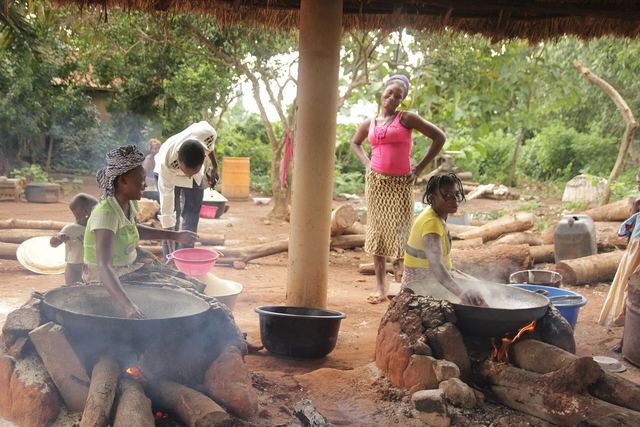
The losses happen in processing, not just growth. Gari making is essentially a water-removal process. In the Nigerian processing units, peeled roots weighed about 73% of the starting weight, pressed mash 48%, roasted gari 28% and sieved gari 25%. Peeling and the loss of water during pressing and roasting account for most of the drop.
How a Processor Should Think About Price
The pricing calculation starts from a realistic yield for the batch, then works back from the gari price to a ceiling price per tonne of roots. An illustrative example with round numbers: if roots are expected to give 20% gari, one tonne yields 200 kg. If gari sells for 10 currency units per kg, the batch is worth 2,000 units. If labour, fuel, water, bags and transport cost 800 units, the processor can pay no more than 1,200 units per tonne of roots before making any profit.
A common miscalculation is to assume that more roots always mean proportionally more gari. Watery roots cost the same per tonne but give less gari, so the same money buys less product. Processors who weigh a trial batch of each new supply, and keep records of roots in and gari out, can adjust their offer price before the next purchase. Roots also start to deteriorate within a few days of harvest, which lowers yield and quality, so buying close to processing time protects the ratio.